The training industry can be underestimated. One individual’s journey from a sports bar chain to venture capitalism reflects a shift in perspective. Learning, data and growth are interconnected. Applying a fractal first principle, learning should be at the core of all endeavors. Technology has advanced learning methods, but a new paradigm is needed for future progress.
I didn’t even know the training industry existed when I got my job at The Forum Corporation thirty years ago. And I had already stumbled around its edges. When I was running a small sports bar chain in my twenties I had built employee manuals and onboarded a lot of employees. Later, I helped a friend of my Mom rewrite a sales training course. but I still had no idea there was a billion dollar industry where companies paid millions for products and services every year. There had never been a box labeled training on any organization chart I saw in business class. We had never discussed a company’s training as part of investment analysis when I was a stockbroker. Even today I find it hard to convince others that this area is a treasure trove. My pitch, “Why only invest in Ai when you can also invest in the real thing?” receives only polite nods.
I understand the apathy. Even after working for Forum and getting the amazing opportunity to see inside the learning organizations at a host of tech and finance giants worldwide I didn’t believe the potential. Which is why I left to go into venture. Incremental strategies for internal departments loaded down with legacy baggage seemed tedious compared to the wide open playing field of venture during the first dot-com boom. People understood what I did for the first time. I was surrounded by optimists convinced they could change the world, not realists that were fighting to change a century of entrenchment in a model built for a different time. And just when I thought I was out of learning for good, I was in an airport watching a live Twitter AMA with Eric Ries, the godfather of the Lean Startup movement. During the chat Ries said a start up, “is just an organization built to learn.” With that one sentence I realized that what I had thought were two synergistic but separate career paths were in fact the same one.
Two loves fueling learning
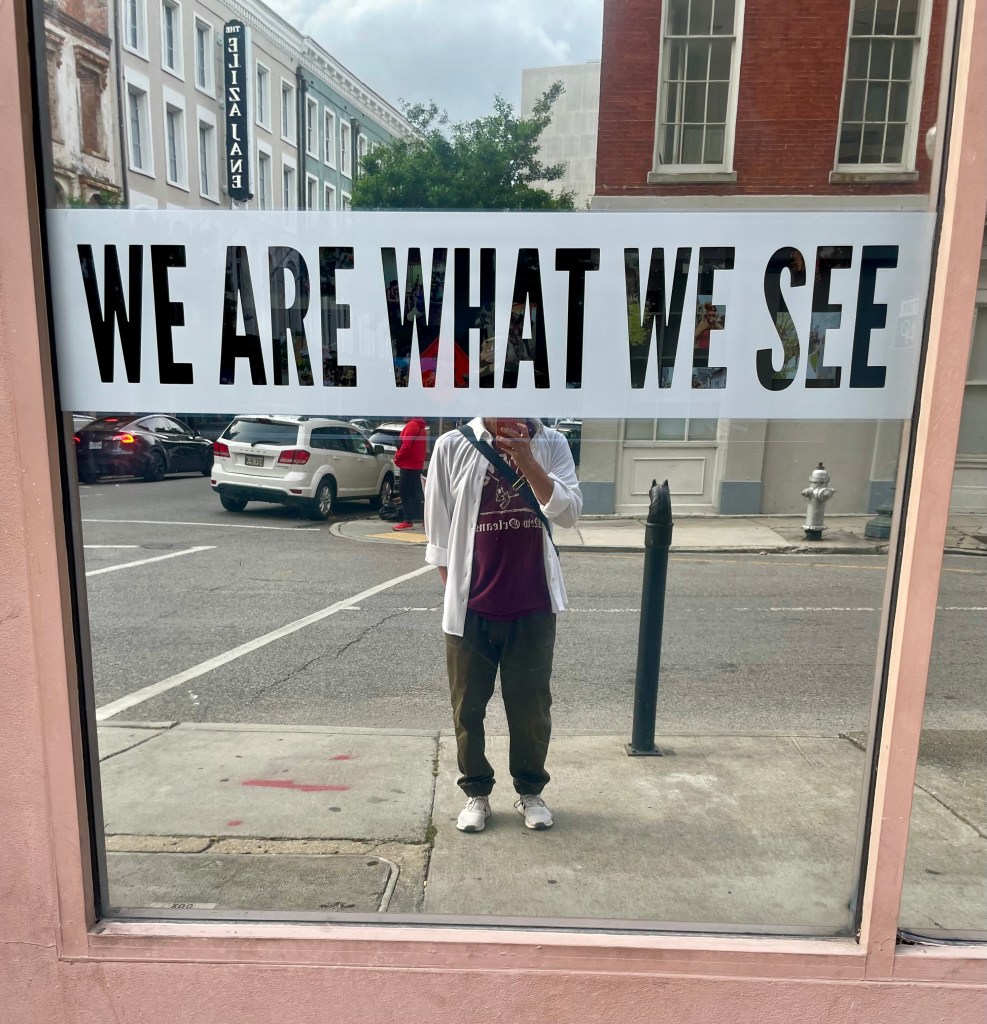
Our love of data comes from a love for feedback. Our love of looking at ourselves. Reflection, following action, for the purpose of learning to improve. It is our glance at the mirror after we have donned an outfit, the yearning for likes and retweets, the eagerness with which we await conversions stats or A/B test results. Our huge efforts of quantification, and all too often rationalization, are to complete this Action-Reflection cycle.
Our love for growth requires that we learn new things; new markets, new products, new skills, new ways of working. Learning is not a department to be buried levels deep in an organization chart. Nor is it an activity to only occur for a few hours every year in formal experiences designed for information sharing and based on simple stimulus-response mechanisms. CEO’s are the chief facilitator of learning, directing its focus and providing its resources through budgets, people and the example they set.
As both organizations and individuals, we are learning all the time. It is obvious to me that on any scale, from organism to organization to society, learning is the key to success.
Fractal first principle: Always build for learning.
Let’s Build Smarter
The brute force and networking phase of advancement is over. We have tapped into the world’s knowledge bases and technology has given us tools to see patterns shaped by more data points than our optimized-for-chunk memory can comfortably hold. We have optimized the old. Put classes on line (distribution), improved presentations (media), customized for the learner (pathing). From blackboards, to overhead projectors to Powerpoint and now to video, technology has made the same old thing look shiny and new. It’s time for something more than Moore’s law to move us forward. We have incremented our way to the frontier but now we need more than a new product or distribution channel we need a new paradigm.
We’ve learned a lot in the last couple of centuries. We learned that we were made of atoms and how to harness and abuse that atom. We learned that even the smartest of us (looking at you Newton) can be wrong. We learned we could build anything our imaginations could put into a sci-fi novel. We learned to survive, conquer, and exploit nature. We learned how small we are in the universe and how big we are on the planet. We learned that the Pax Romana was a bigger accomplishment than we thought. We learned we are so similar and so different. We learned we can live longer. We learned length really doesn’t matter. We learned we are not the center of the universe. We learned that we still think we are. We have learned our way out of our biggest problems (got my eye on you famine). Look at what we accomplished with just a little bit of learning. Imagine what we could with a little bit more.
Reminder: The future of learning is our future. Let’s build the future.


 Running Training Like A Business 2.0